



When you ask how do I plan an office move with minimal downtime, the answer is careful preparation and controlled execution, especially if you work with commercial movers in St Petersburg FL such as Karma Movers St Petersburg FL who understand local buildings, traffic, and business needs.
Minimizing downtime is not about rushing move day. It is about starting early, building a realistic timeline, coordinating with landlords and IT, and using after hours windows whenever possible. This guide explains how to turn a complex office move in St Petersburg, Clearwater, Largo, Seminole, Gulfport, Pinellas Park, or Tampa into a staged, low disruption project.
Table of Contents
Planning an office move in St Petersburg
Planning an office move in St Petersburg starts with defining why you are moving, when you need to be operational, and which functions are most critical. From there you can design a move plan that protects revenue and client service rather than just moving furniture.
Key early actions include:
- Confirming your move out date and target go live date
- Mapping both locations, including floors, suites, and access routes
- Listing all departments and how each one uses the current space
- Identifying high impact functions such as call centers or clinics
- Talking to building managers about loading docks, elevators, and parking rules
City departments manage parking lots, garages, and on street spaces, including permits, so planning load in and load out around these rules helps avoid unexpected delays near your buildings.
How do I plan an office move with minimal downtime?
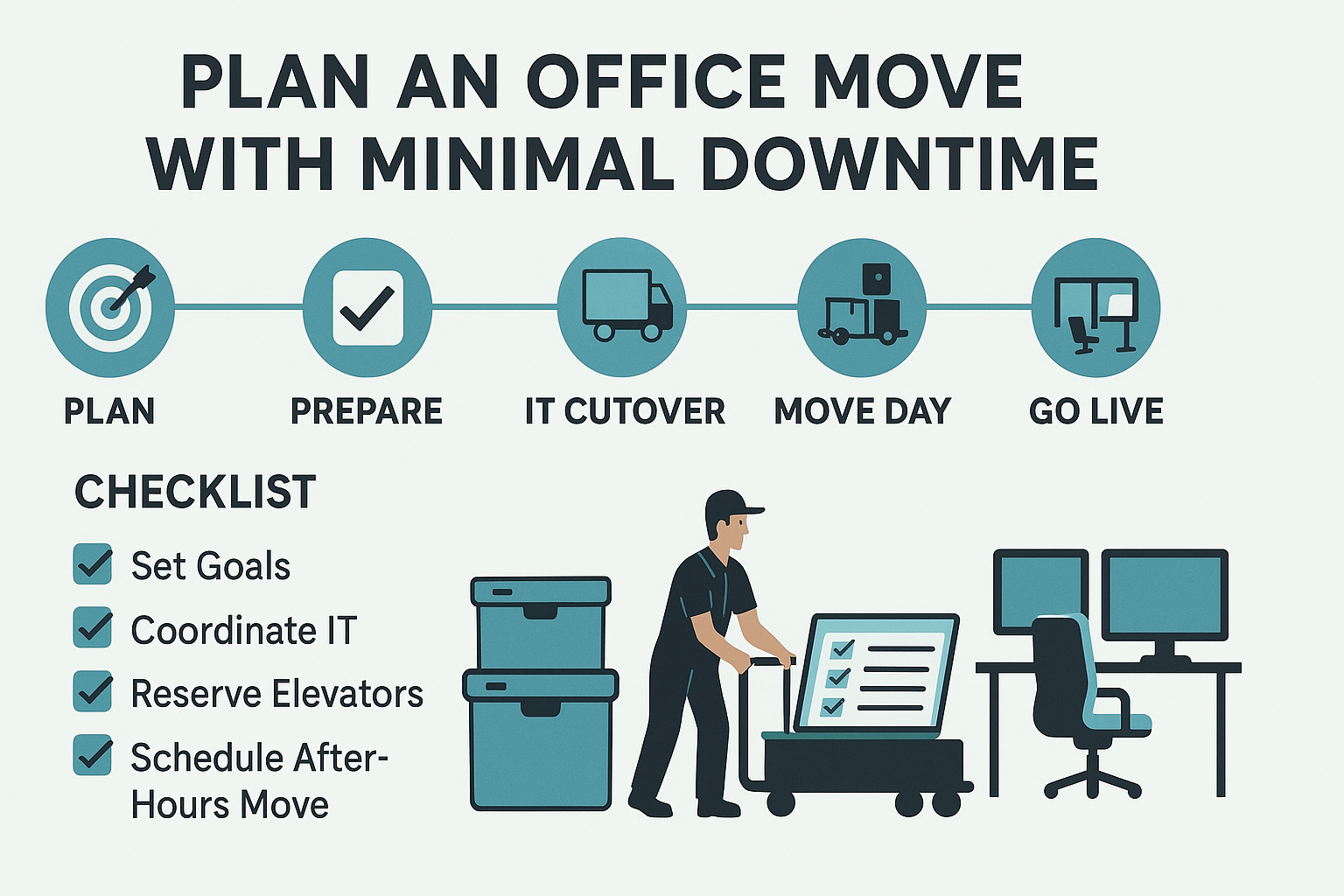
To plan an office move with minimal downtime, you set clear continuity goals, start planning at least several weeks in advance, phase departments instead of moving everyone at once, align IT cutovers with the move, and use after hours windows to shift work between locations.
A practical low downtime plan usually includes:
- A written timeline showing when each department moves
- A cutover plan for phones, network, and core applications
- A communication plan for employees, clients, and vendors
- A detailed scope for your commercial movers and IT teams
Federal consumer resources such as FMCSA’s Protect Your Move materials emphasize written plans, checklists, and clear contracts as foundations for any move, and those principles apply directly to office relocations.
Setting goals for budget, timing, and disruption
Before you schedule dates, decide what “good” looks like for your move. Useful goals include:
- Maximum acceptable downtime for each department
- Target budget range and cost ceiling for the move
- Preferred days and hours for the main move window
- Maximum number of days staff can work split between sites
For example, you might decide that support teams can handle one day of reduced capacity but revenue producing teams cannot, so their move is scheduled overnight or over a weekend.|

How long does an office move usually take?
An office move usually takes from one day for a small single suite relocation to several days or weekends for larger, multi floor, or multi site offices, because crews must pack, load, travel, unload, and set up while working around building rules and business hours.
Approximate ranges:
- Up to 10 workstations, same building or nearby, limited packing by movers
- Often fits into a single long day or one evening plus a partial day
- 10 to 40 workstations, more furniture and equipment, some cubicle work
- Frequently one to two full days plus pre packing time
- 40 plus workstations or multiple floors or sites
- Often staged across a weekend or several synchronized days
These are planning ranges, not guarantees. The actual schedule depends on elevators, loading docks, truck access, and how much packing crews must do for you.
Building a commercial moving timeline and checklist
A structured, written timeline is the core of a low downtime move. You can work backward from your go live date and assign tasks to weeks and owners.
Example outline for a medium size office:
- Eight to twelve weeks before
- Confirm leases and move out dates
- Select commercial movers after site visits and written quotes
- Identify internal move coordinator and departmental leads
- Six to eight weeks before
- Finalize floor plan and workstation assignments at the new site
- Build inventory lists for furniture, equipment, and special items
- Start decluttering and removing obsolete equipment and files
- Four to six weeks before
- Order crates, boxes, and labels
- Schedule elevators, loading docks, and any city permits if needed
- Confirm IT requirements for network, phones, and servers
- Two to three weeks before
- Begin packing low priority areas and archives
- Finalize move sequence for each department
- Send detailed instructions to staff about packing and labels
- Final week
- Pack everyday items according to the schedule
- Confirm times with movers, IT, landlords, and security
- Issue move day contact list and escalation paths
FMCSA moving checklists provide a model for breaking large moves into time based tasks with clear responsibilities, which you can adapt to office moves.
How do you move an office without disrupting business?
You move an office without disrupting business by spreading the move across off peak hours, phasing departments, putting temporary workarounds in place, and ensuring that phones, email, and core systems stay available or have clearly planned downtime windows.
Tactics that protect operations include:
- Moving support departments before or after frontline teams
- Using temporary routing of phones and email while systems move
- Letting some staff work remotely while office infrastructure changes
- Scheduling high impact moves, such as server relocation, at night
- Providing a fallback plan if systems are not fully ready at the new site
Business continuity guidance highlights the value of mapping critical functions, designing fallback scenarios, and having a documented way to keep essential operations running when relocating or facing interruptions.
Coordinating with landlords, elevators, and building rules
Landlords and building managers control several variables that affect downtime. Early contact prevents surprises.
You should:
- Ask for written building rules about moves and deliveries
- Reserve freight elevators and loading docks for specific windows
- Clarify hours when noisy work or large moves are allowed
- Confirm requirements for insurance certificates and supervision
- Coordinate any needed street or lot permits for truck parking
In St Petersburg, parking and access around central business areas are managed by city departments, so coordinating move truck locations with those rules can save time on move day.
IT, servers, and data protection during the move
IT planning is a major factor in downtime. A well run office move should treat IT cutover as its own project with a specific timeline and risk plan.
Core steps:
- Inventory all hardware, circuits, and critical applications
- Confirm availability of internet, power, and cooling at the new site
- Schedule data backups before shut down and before physical move
- Label racks, cables, and devices clearly for reassembly
- Decide which systems must stay online and which can have planned downtime
Ergonomic and material handling guidance from OSHA and NIOSH advises using mechanical aids and team lifting for heavy equipment to reduce injury risk, which helps keep crews and staff safe while moving servers, UPS units, and other heavy devices.
Staging, packing, and phased department moves
Phased moves let you keep part of your office fully operational while another part transitions.
Methods used by many commercial projects:
- Color coding crates and labels by department or zone
- Moving low priority storage and archives in early phases
- Relocating pilot teams first to validate the new setup
- Leaving a small “bridge” team at the old site until all issues are resolved
Packing should follow clear rules. For example, staff may pack personal items and simple desk contents, while movers pack files, shared storage, and sensitive equipment. This division keeps skilled crews focused on tasks that have higher impact on downtime.
When should I start planning an office relocation?
You should start planning an office relocation at least eight to twelve weeks before your target move date for small to medium offices, and significantly earlier for large or multi site moves, so you have enough time to plan, schedule vendors, and communicate with staff and landlords.
Signs that it is time to start planning include:
- You are negotiating or finalizing a new lease
- Your landlord has issued a firm move out or renovation date
- You want to time the move with a season, project, or contract cycle
- IT or facilities teams need long lead times for cabling or equipment
Starting early also gives you time to secure preferred weekends, evenings, or holiday windows that might otherwise be booked by other tenants.
Working with commercial movers for after hours moves
Commercial movers are central to low downtime moves because they provide the labor, trucks, and practical experience to execute your plan during limited windows, including nights and weekends, while your staff focuses on work and clients.
When discussing after hours work:
- Ask about evening and weekend availability and pricing
- Confirm how many crews and trucks can be assigned to your project
- Clarify noise restrictions and building access rules for off hours
- Plan for on site supervision from your move coordinator or facilities team
Do commercial movers work evenings and weekends?
Many commercial movers do work evenings and weekends, especially in downtown and business park environments, because after hours moves reduce disruption for tenants and customers, but these windows may have different rates or minimums and must be booked well in advance.
In St Petersburg and nearby cities, after hours moves are common for multi tenant office buildings that prohibit daytime moves, so confirming options early helps you align building rules, mover schedules, and your internal continuity plans.
Office move day: execution and quality control
On move day, downtime depends on disciplined execution more than any single tool. Your move coordinator should treat the day like a planned operation.
Checklist items:
- Confirm crews, trucks, and supervisors have correct access and contact numbers
- Walk key paths between suites, elevators, and docks to confirm clearance
- Monitor labeling quality so items arrive in the right zones and rooms
- Keep a simple log of issues, delays, and last minute decisions
- Verify that critical areas at the new site are set up first
FMCSA planning tips highlight the importance of understanding your contracts and having a way to escalate issues quickly, which is just as important for commercial moves as it is for household moves.
Post move review and support for your team
After the move, you should conduct a quick review to close any gaps and capture lessons for future changes.
Actions in the first week:
- Survey staff about workstation comfort, equipment, and any missing items
- Confirm that documented issues from move day are resolved
- Check that safety, access, and signage are clear in the new layout
- Update floor plans, asset lists, and vendor contact information
Local business organizations such as the St Petersburg Area Chamber of Commerce encourage planning and collaboration among businesses as they grow or change locations, which aligns with this emphasis on reflection and continuous improvement after a move.
Office move planning FAQs for St Petersburg companies
Q: What is the first step in planning an office move?
A: The first step is to define your move objectives, including reasons for relocating, required go live dates, and which departments are most critical, then appoint an internal move coordinator to own the plan and vendor communication.
Q: Who should lead the office move inside our company?
A: The move should be led by a single coordinator who understands operations, often from operations, facilities, or project management, supported by representatives from IT, finance, HR, and each department to make decisions and relay information.
Q: How far in advance should we reserve elevators and loading docks?
A: Many buildings allow reservations four to eight weeks before the move, but some popular downtown St Petersburg locations book up earlier, so you should ask for written rules and reserve your windows as soon as your dates are firm.
Q: Should employees pack their own desks and personal items?
A: Many companies ask employees to pack personal items, small desk contents, and decor, while movers handle shared files, storage, and equipment, which keeps crews focused on tasks that require tools, training, and specific packing materials.
Q: How detailed should our office move floor plan be?
A: A useful floor plan shows department zones, every workstation label, major furniture locations, printer stations, and shared storage areas, and it matches the labels and color codes used on crates so movers can place items correctly without guesswork.
Q: How do we communicate move details to clients and vendors?
A: You should send notices well in advance with key dates, any temporary changes in service, new address details, and updated billing or shipping information, and you should update websites, invoices, and directory listings as soon as the move is complete.
Q: What metrics show that our office move was successful?
A: Useful metrics include total downtime for critical teams, number of unresolved move related issues after the first week, variance from budget and schedule, and employee feedback about workspace readiness, safety, and ease of settling into the new office.
Plan your low downtime office move in St Petersburg
A low downtime office move in St Petersburg depends on early planning, realistic timelines, and reliable partners. By defining priorities, coordinating with landlords and IT, and working with experienced commercial movers in St Petersburg FL, your business can relocate while protecting service levels for clients.
When you are ready to move within St Petersburg or between nearby areas such as Clearwater, Largo, Seminole, Gulfport, Pinellas Park, and Tampa, use this guide as a checklist, then request a site visit and written plan so your next office move runs as a controlled project, not a disruption.