
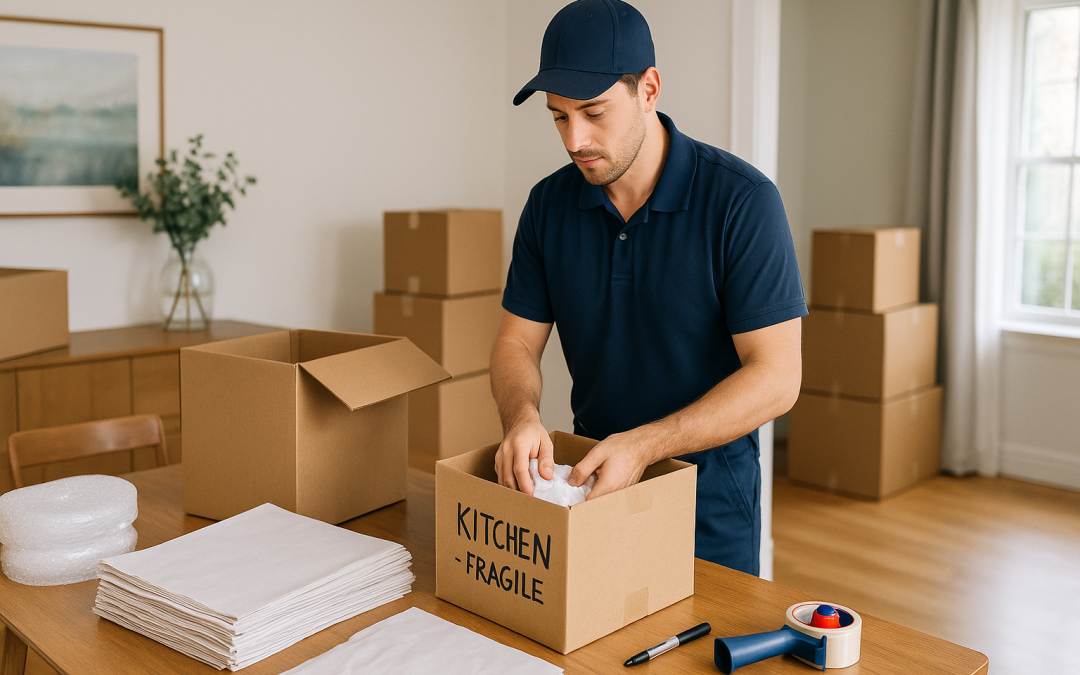
When people ask what is included in packing services, they want a clear list of tasks that movers actually perform. Karma Movers moving and packing services in St Petersburg, FL provide a useful example of how professional crews handle materials, boxing and fragile items as part of a structured service.
This guide breaks down what packers do, which materials are typically supplied, what remains your responsibility and how service levels can be customized. It is based on common industry practice and guidance from regulators and consumer organizations so you can compare quotes and avoid misunderstandings. (FMCSA)
Table of Contents
What is included in packing services?
Packing services generally include providing packing labor, using appropriate materials and preparing agreed household items for transport so they can be loaded safely into a moving vehicle. The specific scope depends on the service level you purchase and what is written in your estimate.
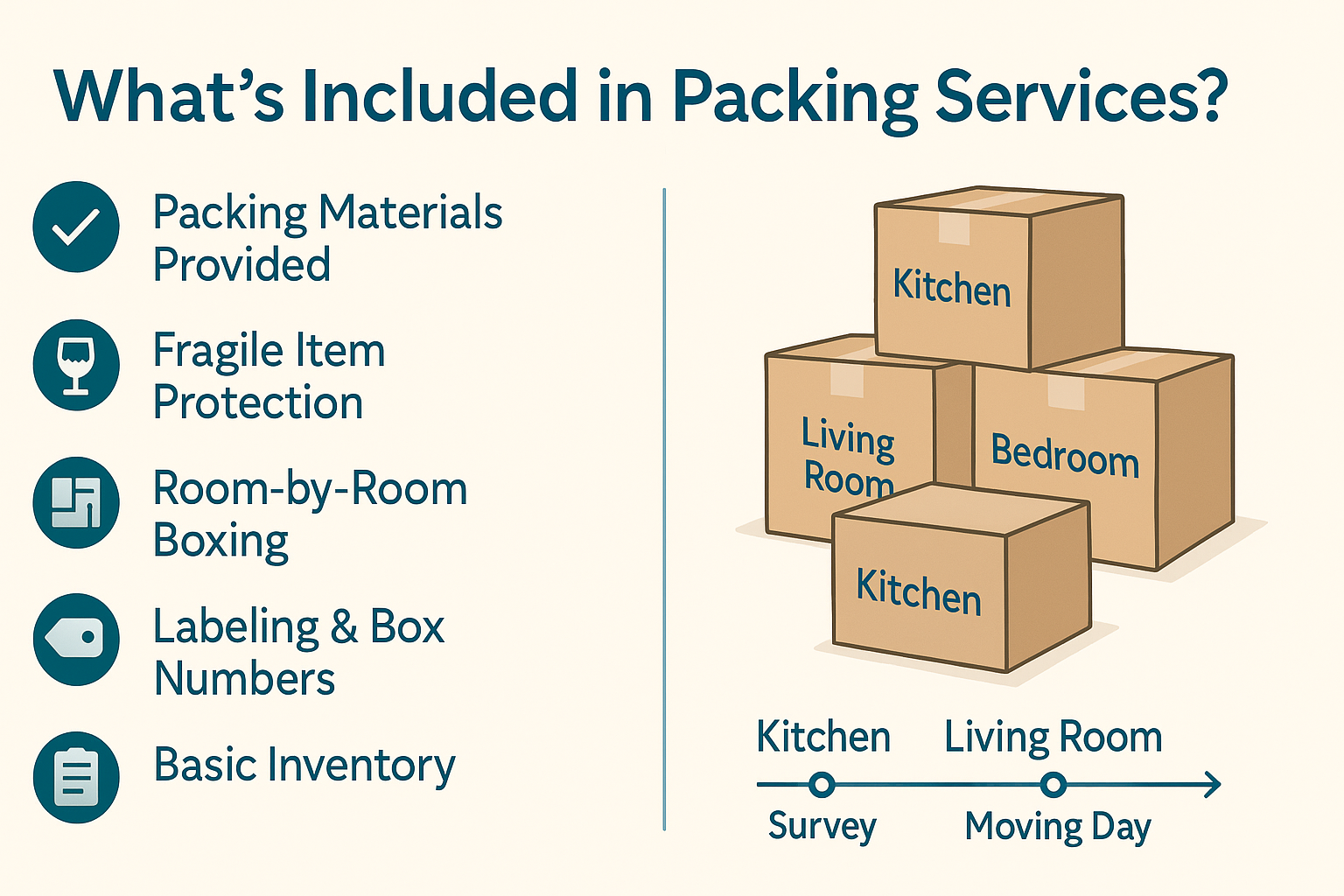
In practical terms, a standard residential packing service usually covers:
- Selecting suitable box sizes for each room.
- Wrapping items in paper or other protective material.
- Filling and sealing cartons to a safe weight.
- Labeling boxes by room and basic contents.
- Preparing furniture with pads and stretch wrap where needed.
Full packing services often include every room in the home, while partial packing focuses on fragile or complex areas such as kitchens, dining rooms, home offices or collections. The agreement should state which rooms and categories are included so that both you and the mover share the same expectations.
Regulators recommend getting all services in writing and retaining copies of inventories and contracts, especially for interstate moves where federal rules apply. (FMCSA)
Types of packing services offered
Packing is typically sold in several levels so customers can match cost and effort to their situation.
Common service types include:
- Full packing services
- Crew packs nearly everything that can reasonably go into cartons.
- Suitable for busy households, large homes or moves on short timelines.
- Fragile only or specialty packing
- Crew packs glassware, dishes, artwork, electronics and other delicate items.
- You handle non fragile belongings such as clothing, books and simple decor.
- Room focused packing
- Movers pack specific rooms such as kitchens or offices that are time consuming.
- Helpful when you want to save time without paying for full house packing.
- Unpacking services
- At destination, crew can unpack cartons, place items on counters or surfaces and haul away used packing materials.
The quote should identify which of these service types you are purchasing, how many labor hours are included and whether materials are billed separately or as part of a flat or hourly rate.
Are packing services available for partial moves?
Packing services are commonly available for partial moves where only certain rooms or categories are packed by the mover instead of the entire home. Customers can choose fragile only, room specific or item specific packing to control cost while still getting professional help for higher risk belongings.
Partial packing is useful when:
- You are comfortable boxing clothing and books but not glass or electronics.
- Time is limited for only part of the home, such as the kitchen.
- You are combining a self move with professional packing for a single shipment.
Most companies treat partial packing as a standard option, priced on crew time plus materials. It is important to describe exactly what you want the crew to pack during the survey so they can bring enough cartons and protective supplies.
Materials and supplies movers provide
Packing services usually involve movers bringing a range of materials that are suited to the weight and fragility of your belongings. These supplies are chosen to protect items during normal handling and transport, and many are based on long standing industry standards. (FMCSA)
Typical materials include:
- Small, medium and large corrugated cartons.
- Dish barrels or double wall boxes for heavy kitchen items.
- Wardrobe cartons for hanging clothes.
- Packing paper and newsprint.
- Bubble wrap or foam padding for delicate surfaces.
- Tape, stretch wrap and labels or markers.
Some movers also use mattress bags, mirror cartons and custom crates for specific items. In most cases, unused cartons can be left for you to pack additional items later if agreed in advance.
Do packing services include materials?
Many packing services include materials, but not all quotes handle them the same way. Some companies charge a separate line item for cartons and protective supplies, while others roll average material costs into an hourly or flat packing rate. You should verify whether both labor and materials are included before booking.
Check your estimate for:
- A list of standard carton sizes and quantities.
- Any unit prices for specialty boxes or custom crates.
- Policies on unused materials or returning surplus supplies.
- Environmental or recycling options for paper and cardboard.
When you know how materials are billed, you can compare quotes on an equal basis and avoid surprises related to box counts or specialty packing needs.
Boxes, wraps and specialty containers
Boxes and protective wraps are central to a safe packing service. Correct combinations of size, strength and padding reduce the risk of crushing, puncture and internal shifting.
Movers typically use:
- Small boxes for heavy items like books, tools and canned goods.
- Medium boxes for general household goods such as toys, linens and decor.
- Large boxes for light bulky items like pillows and bedding.
- Dish barrels with double walls for dishes, glassware and heavy kitchenware.
- Mirror or picture cartons adjusted to the size of frames and artwork.
Protective materials such as bubble wrap, paper and foam corners are used to cushion edges and fill voids so items cannot move freely inside cartons.
Do packing services include labeling and inventory?
Most professional packing services include basic labeling and may include a box level inventory, especially on long distance or high value moves. Labels help crews place boxes in the correct rooms and support any claims process, while inventories document what was loaded and delivered.
Common practices include:
- Marking each box with destination room and short content description.
- Using unique box numbers or barcodes for larger shipments.
- Recording high value items or special handling notes.
- Creating a written or digital inventory that you can review and sign.
Regulators and consumer resources recommend keeping copies of inventories and using them to verify that shipments arrive complete and in good condition. (FMCSA)
Do movers pack fragile and valuable items?
Most movers will pack fragile and many valuable items if this is included in your packing service and if the items are permitted under the company’s policies. Fragile goods are normally wrapped, cushioned and boxed using specific methods to minimize shock and vibration during transport.
Examples of fragile items that are typically packed by movers include:
- Glassware, stemware and ceramic dishes.
- Mirrors, framed photos and artwork.
- Lamps, figurines and decorative objects.
- Electronics that fit safely into cartons.
Valuable items such as jewelry, cash, rare documents or irreplaceable collections may be excluded from standard packing and liability coverage. Carriers and consumer agencies often recommend that you transport those yourself rather than including them in the shipment. (FMCSA)
Before packing begins, you should:
- Identify any high value items that do need to travel with the mover.
- Ask how those items are declared for valuation or extra coverage.
- Confirm any exclusions in writing so there are no gaps in protection.
What movers expect you to handle
Even with a full packing service, there are categories of belongings that movers commonly ask you to pack or transport yourself for safety, legal or practical reasons.
Typical examples are:
- Important personal documents
Passports, medical files, banking records and legal papers are best kept with you. - Medications and medical devices
Daily prescriptions, temperature sensitive medicines and certain equipment should stay accessible at all times. - Hazardous or restricted materials
Flammable liquids, pressurized cans, some cleaning chemicals and similar items are usually prohibited in moving trucks. - Perishables and open food
Open containers, refrigerated food and items at risk of spoilage are often excluded from shipments.
Regulators and consumer advocates advise checking written lists of prohibited items before packing and reviewing any questions with the mover or coordinator prior to moving day. (FMCSA)
Packing service options in St Petersburg, FL
In St Petersburg and nearby communities, packing services are commonly offered as part of local and long distance moving packages. Quotes are often structured around:
- The number of crew members.
- Estimated hours of packing labor.
- Expected volume of materials.
- Travel time and access conditions.
St Petersburg households frequently combine packing with local moving, long distance relocation or storage moves, depending on whether belongings are going directly to a new address or into a storage facility. (Karma Movers)
Nearby service areas that often use the same packing crews include:
- St Petersburg neighborhoods such as Old Northeast, Kenwood and Shore Acres.
- Gulfport, South Pasadena and St Pete Beach.
- Largo, Pinellas Park and Seminole.
- Selected areas of Clearwater and surrounding communities.
Service boundaries and travel charges are defined by each company, so they should be confirmed in advance if your pickup or delivery is outside central St Petersburg.
How Karma Movers structures packing services
Karma Movers St Petersburg FL provides moving and packing services that can be adjusted to home size, distance and risk level. Their online information indicates a focus on customized plans, item protection and combining packing with transport and other moving tasks. (Karma Movers)
Typical structural elements include:
- Packing services integrated with local and long distance moves.
- Crews that both pack and load, reducing handoffs between teams.
- Options for packing, unpacking and furniture preparation.
- Attention to fragile handling and appropriate materials.
Customers can use the main site or contact channels to request estimates that separate out packing labor, materials and other moving components. This structure makes it easier to decide whether to choose full packing, partial packing or a hybrid approach based on time and budget.
FAQs about what packing services include
How packing services work in real homes
Q: How do movers decide which boxes to use for each item?
A: Movers select box sizes based on weight and fragility, using smaller boxes for heavy items and larger boxes for light bulky goods. They place delicate items in double wall cartons or with extra padding so boxes stay manageable and contents are protected.
Q: Can I use my own boxes with professional packing services?
A: Many movers will pack into your own boxes if they are strong and in good condition, although they may decline damaged or weak cartons. Some companies prefer their own boxes for fragile items to maintain strength and consistency during loading and stacking.
Q: Will packers organize items by room or by category?
A: Most crews organize cartons by destination room and loosely by category, such as “kitchen dishes” or “bedroom clothes.” This approach makes loading and unloading more efficient and helps you and the crew place cartons in the right rooms on delivery.
Q: Can I leave clothes and items in drawers when movers pack furniture?
A: Lightweight items such as some clothing may sometimes stay in drawers, but heavy or fragile items should be removed. Policies vary, and many movers prefer empty drawers to prevent stress on furniture joints, so you should confirm during the survey.
Q: How do packers handle electronics like TVs and computers?
A: Electronics are usually packed in TV boxes or custom cartons with padding around screens and corners. When original manufacturer boxes are available, they may be used. Movers also typically ask you to disconnect and back up devices before packing.
Q: Do packing services cover garages, sheds and outdoor areas?
A: Packing coverage for garages and outdoor areas depends on the agreement and what is safe to move. Non hazardous tools and equipment can often be boxed or wrapped, while fuels, chemicals and certain outdoor materials are usually excluded and must be handled separately.
Q: Are children’s items and toys packed differently from other belongings?
A: Children’s items and toys are packed much like other household goods, with attention to small parts and delicate pieces. Many families choose to keep a separate “first night” box of essential toys and comfort items that travel in their own vehicle for easy access.
Get a packing services quote in St Petersburg FL
Once you understand what is included in packing services, the next step is to compare written estimates. Use official resources such as FMCSA Protect Your Move, FMCSA tips for a successful move, FTC guidance on avoiding moving scams and the BBB guide to hiring a mover to verify licensing and complaint history before you book. (FMCSA)
To request a detailed quote that separates packing from other services, you can contact Karma Movers St Petersburg FL and reference your home size, inventory and any fragile or high value items that need special handling. For additional safety planning on moving day, consider the Red Cross guidance on avoiding injuries during a move. (Karma Movers)
A clear written description of what is included in packing services, combined with verified credentials and realistic scheduling, reduces the risk of damage, disputes and unexpected costs for moves in St Petersburg and nearby Florida communities.